
(877) 533-7878
How to Adjust Your Irrigation Schedule for Summer Heat
How to Adjust Your Irrigation Schedule for Summer Heat
As temperatures rise, your irrigation schedule should too. What worked during the spring may no longer provide enough water during the hotter summer months. Increased heat, longer daylight hours, and dry conditions can all affect how quickly soil loses moisture and how hard your irrigation system needs to work.
Making adjustments throughout the summer can help maintain healthier crops, reduce water waste, and improve overall irrigation efficiency during peak season.
Why Summer Heat Changes Watering Needs
During the summer, plants naturally require more water. Higher temperatures increase evaporation from both the soil and plant surfaces, causing moisture to disappear much faster than it did earlier in the season.
However, more heat does not always mean simply adding more water. Soil type, crop variety, humidity, wind exposure, and recent rainfall all affect how quickly moisture is lost and how often irrigation schedules should be adjusted.
Monitoring conditions throughout the season can help prevent crop stress before it becomes visible in the field.
How Monitoring Conditions Improves Summer Irrigation Decisions
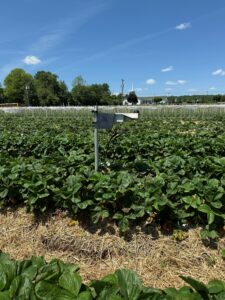
As summer heat increases evaporation and changes how quickly soil loses moisture, having real-time information becomes essential. This is where soil moisture monitoring and weather-based irrigation insights can make a major difference for growers.
Modern irrigation isn’t just about adding more water when crops look dry. Through precision agriculture tools, growers can make data-driven decisions that match irrigation to actual crop needs rather than relying on fixed schedules. At Lee Rain, our Agricultural Analytics and Plant-Triggered Irrigation programs gather field data to understand how crops are responding to changing soil moisture conditions throughout the season.
By continuously tracking moisture levels within the root zone, growers can identify when plants are approaching stress and apply water before yield or quality are affected. This helps avoid both underwatering during extreme heat and overwatering, which can lead to runoff, nutrient leaching, and reduced soil oxygen.
Combining monitoring tools with irrigation automation supports more consistent soil moisture, improved water-use efficiency, and better crop performance during peak summer demand.
Watering Frequency vs. Watering Duration
One of the most common irrigation mistakes during the summer is dramatically increasing run times as soon as temperatures rise. In many cases, making smaller schedule adjustments more consistently is a more effective approach.
Some soils benefit from shorter, more frequent watering cycles, while others respond better to deeper irrigation less often. Sandy soils tend to dry out quickly, whereas heavier soils typically hold moisture longer.
Finding the right balance between frequency and duration helps maintain consistent soil moisture without overwatering or creating unnecessary runoff.
Best Times of Day to Irrigate
Timing plays a major role in irrigation efficiency during hot weather.
Early morning irrigation is often the most effective because temperatures are lower and winds are calmer.
Watering during the hottest part of the day can lead to excessive moisture loss, while late evening irrigation may increase the risk of disease in some growing conditions.
Timers, controllers, and automated irrigation systems can help maintain reliable watering schedules while reducing the need for constant manual adjustments.
Signs of Overwatering and Underwatering
As temperatures change throughout the summer, irrigation schedules may need ongoing adjustments. Watching for signs of stress can help identify problems early.
Dry or cracked soil, uneven crop growth, and early morning wilting can indicate underwatering.
Standing water, runoff, yellowing leaves, or consistently saturated soil may point to overwatering.
Making small corrections as conditions change can help maintain healthier crops and more efficient water use throughout the season.
Checking System Efficiency During Peak Season
Summer places added demand on irrigation systems, making mid-season inspections especially important.
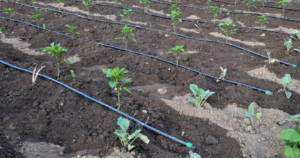
Even small issues such as leaks, clogged emitters, pressure inconsistencies, or uneven sprinkler coverage can reduce irrigation uniformity and waste valuable water.
Regular system checks help maintain proper coverage, consistent flow, and overall system performance during periods of heavy irrigation use.
Tools and Products That Help Maintain Consistency
Having the right irrigation equipment in place can make summer scheduling easier and more efficient.
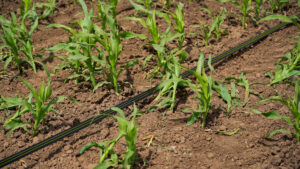
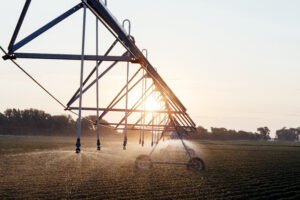
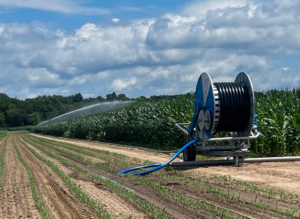
Pivots, hose reels, Rain Tape, filtration systems, timers, and automated controls can all help maintain consistent watering during periods of high heat.
Reliable irrigation equipment not only helps conserve water, but also supports healthier crops and more consistent growing conditions throughout the summer.
As temperatures continue to rise, taking time to evaluate your irrigation schedule and system performance can help your operation stay efficient during peak irrigation season.
Whether you are fine-tuning your irrigation schedule, improving water efficiency, or preparing your system for peak summer demand, the team at Lee Rain is here to help. Contact us to learn more about irrigation solutions designed to keep your system running efficiently all season long.

Copyright 2026 Lee Rain | Agricultural Irrigation All Rights Reserved | Created and Designed by VisionLine Media